A roof-system inspection, not a quick glance
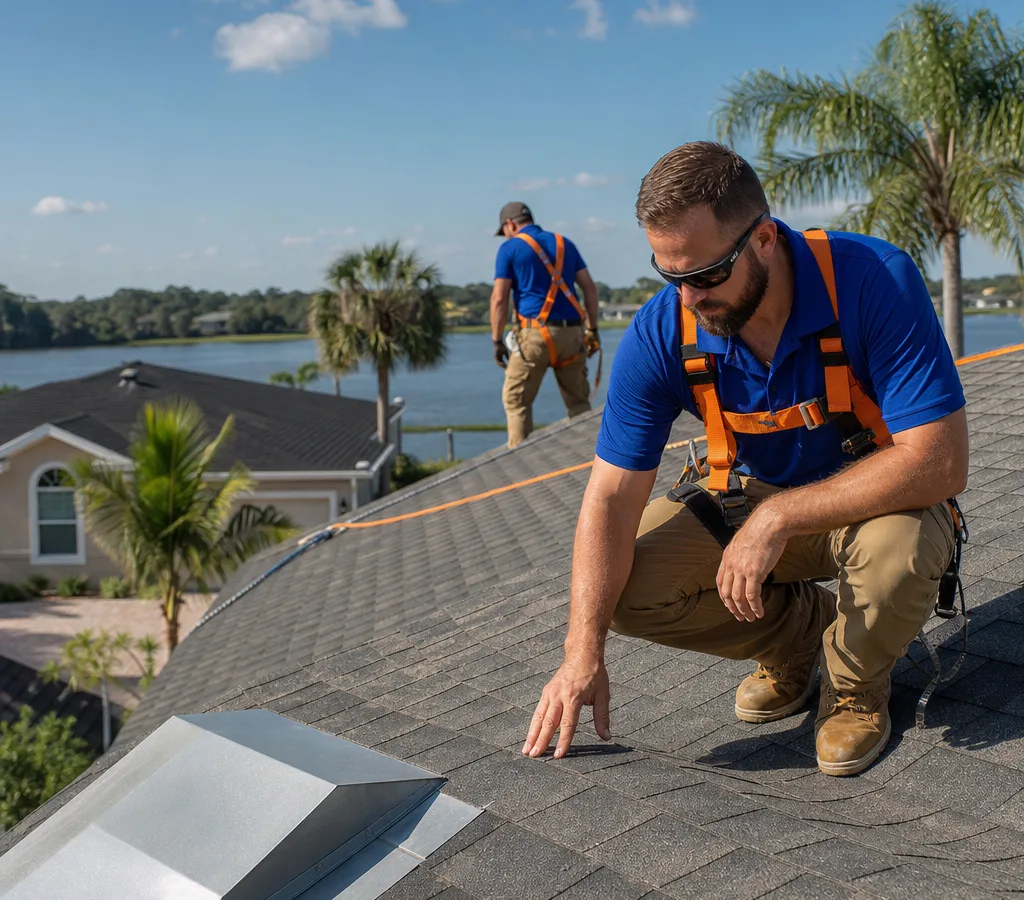
We look at shingles or roofing surface, flashings, penetrations (vents and pipe boots), valleys, drip edge, and signs of moisture problems so the fix matches the cause.
Serving Jacksonville, Florida & surrounding areas
24/7 Response • Answered live
One call instead of ten No web forms, no callback spam Booking Fall & Winter 2026
Jacksonville, Florida roofing service
Get a straightforward inspection, clear options, and a written scope for repairs or replacement so you can make the right call for your home.
✓ Skip the 3-hour Google rabbit hole — we’ve already done the vetting
✓ One conversation, not ten voicemails and seven web forms
✓ 24/7 response — talk to a real person who actually knows Jacksonville
Compare roofers with confidence
If you searched for the best roofer Jacksonville FL, you are probably trying to avoid two things: paying for work you do not need and getting stuck with a roof that still leaks after the job. The fastest way to sort good roofers from risky ones is to focus on how they inspect, how they write the scope, and how they handle details like flashing and ventilation.
At Roofing Jacksonville Florida, our approach is simple: we inspect the roof system—not just the shingles—document what we find, and give you options that match the condition of the roof and your timeline. You should expect a roofer to explain where the water is getting in, what materials are required to stop it, and what is excluded from the scope.
Jacksonville's heat, heavy rain, and hurricane season exposure make roof details matter. Wind-driven rain often finds the weak points first: pipe boots, step flashing at sidewalls, valleys, and transitions around chimneys or roof-to-wall connections. A contractor can replace shingles all day and still miss the actual failure point if the inspection does not include these components.
If you are comparing the best roofers in Jacksonville, ask for three things in writing: the exact repair or replacement scope, the underlayment and flashing plan, and the warranty terms. A professional roofer will be comfortable putting those items on paper before any work begins.
Clear expectations
We look at shingles or roofing surface, flashings, penetrations (vents and pipe boots), valleys, drip edge, and signs of moisture problems so the fix matches the cause.
A good roofer explains what is damaged, what can be repaired, and what would be temporary. You get a written scope that makes comparisons between bids possible.
In Northeast Florida, failures often start at edges and transitions. We prioritize clean tie-ins at roof-to-wall areas, proper sealing at penetrations, and solid valley work.
You should expect landscaping protection, daily debris control, and a final magnetic sweep for nails around driveways and walkways.
A reliable roofer tells you what happens if weather delays the job and how long your home will be in each phase, especially for replacement projects.
Local roof conditions
Jacksonville neighborhoods vary, and that affects how roofing work is planned.
In Riverside and Avondale, many homes have older rooflines and more complex transitions, which means more flashing points and more places where small failures can become interior damage. In San Marco, tree cover and shade can keep roof surfaces damp longer after storms, so it is important to check for compromised materials around valleys and penetrations.
In the Southside and Baymeadows area, newer subdivisions often have simpler roof geometry, but fast, wind-driven rain still tests pipe boots and roof vents first. Around Downtown Jacksonville, property access and parking can be tighter, so a good roofer plans staging, debris handling, and delivery timing to keep the job safe and efficient.
No matter where you are, the standards do not change: the roof has to shed water, resist wind uplift, and move heat and moisture the way the system was designed to. If you are trying to choose the best roofer in Jacksonville, those are the outcomes to measure during the estimate.
You can also get a feel for how a contractor communicates by reading the company overview for Roofing Jacksonville Florida and comparing it to the written scope you receive for your specific roof.
Inspection to closeout
We start with an exterior evaluation and focus on common leak entry points: flashings, penetrations, valleys, and edges. When relevant, we correlate those findings with interior staining patterns.
You receive a clear scope that states what gets repaired or replaced, which materials are used, and what is excluded. If there are multiple reasonable paths, we outline them so you can choose.
We confirm access, staging, debris control, and timing around weather. For replacement work, we also review ventilation and underlayment approach so the system performs as a system.
During the job we check the details that commonly fail: proper flashing integration, sealed penetrations, clean valley lines, and tidy edge work.
We complete a final inspection, clean up the site, and confirm the warranty documentation for the work performed.
Budget planning
Most Jacksonville roofing repairs typically range from about $250 to $1,500, while a full roof replacement commonly runs $9,000 to $20,000+ depending on roof size, pitch, material, and complexity.
Your final price changes with tear-off layers, decking repairs, access, the amount of flashing and valley work, and whether you are updating ventilation or adding code-required components. The exact cost is confirmed after an on-roof inspection and a written scope.
Jacksonville homeowner experiences
“We had a leak that two previous repairs never fully solved. The inspection showed it was flashing, not missing shingles. The written scope made it easy to understand, and the next storm proved it was fixed.”
“What I liked most was how clear the estimate was. It spelled out the materials, what would be replaced, and what would not. The crew protected our driveway and cleaned up nails afterward.”
“Scheduling was straightforward and they explained what weather would do to the timeline. The work around the vents and valley looks clean and the roofline is tidy.”
Homeowner questions
Compare written scopes line-by-line, not totals. The best roofers in Jacksonville will spell out underlayment, flashing approach, penetrations (pipe boots and vents), valley details, decking repair allowances, and warranty terms so you can tell whether bids are truly equivalent.
Ask where the water is entering, what component failed (flashing, penetration, valley, or field shingles), and how the repair ties into adjacent materials. In Jacksonville, wind-driven rain often exposes weak transitions, so you want a roofer who can explain the path of water, not just replace what looks worn.
Many repairs can be scheduled quickly when the scope is clear and materials are available, but timing depends on weather and access. For replacement work, expect additional lead time for planning, delivery, and a multi-day install window if storms are in the forecast.
You usually choose replacement when there are widespread issues, repeated leaks in different areas, or the roof system is near the end of its service life. If the problem is isolated to a penetration, flashing run, or small area of damage, a targeted repair can be the right move, provided the surrounding materials are still sound.
A roofing warranty should state what is covered, for how long, what maintenance is required, and what conditions void coverage. It should also clarify whether it covers workmanship, materials, or both, and how claims are handled if a leak occurs at a repaired or replaced area.
You do not usually need to be home for the full job, but it helps to be available for the initial walkthrough and final sign-off. If you have pets, parking constraints, or gated access, confirming those details ahead of time keeps the work moving safely.
Start with a clear inspection
Tell us what you are seeing—leak, missing shingles, storm damage, or an aging roof—and we will schedule an inspection, then provide a clear scope and pricing you can compare with confidence.