Leak response and diagnostics
Trace leaks to the source with a roof-top inspection that checks drains, flashing lines, penetrations, and rooftop equipment transitions, then propose the repair that matches the failure.
Serving Jacksonville, Florida & surrounding areas
24/7 Response • Answered live
One call instead of ten No web forms, no callback spam Booking Fall & Winter 2026
Commercial roofing · Jacksonville, Florida
Get clear recommendations for your flat or low-slope roof, backed by an inspection you can share with owners, tenants, and insurers.
✓ Skip the 3-hour Google rabbit hole — we’ve already done the vetting
✓ One conversation, not ten voicemails and seven web forms
✓ 24/7 response — talk to a real person who actually knows Jacksonville
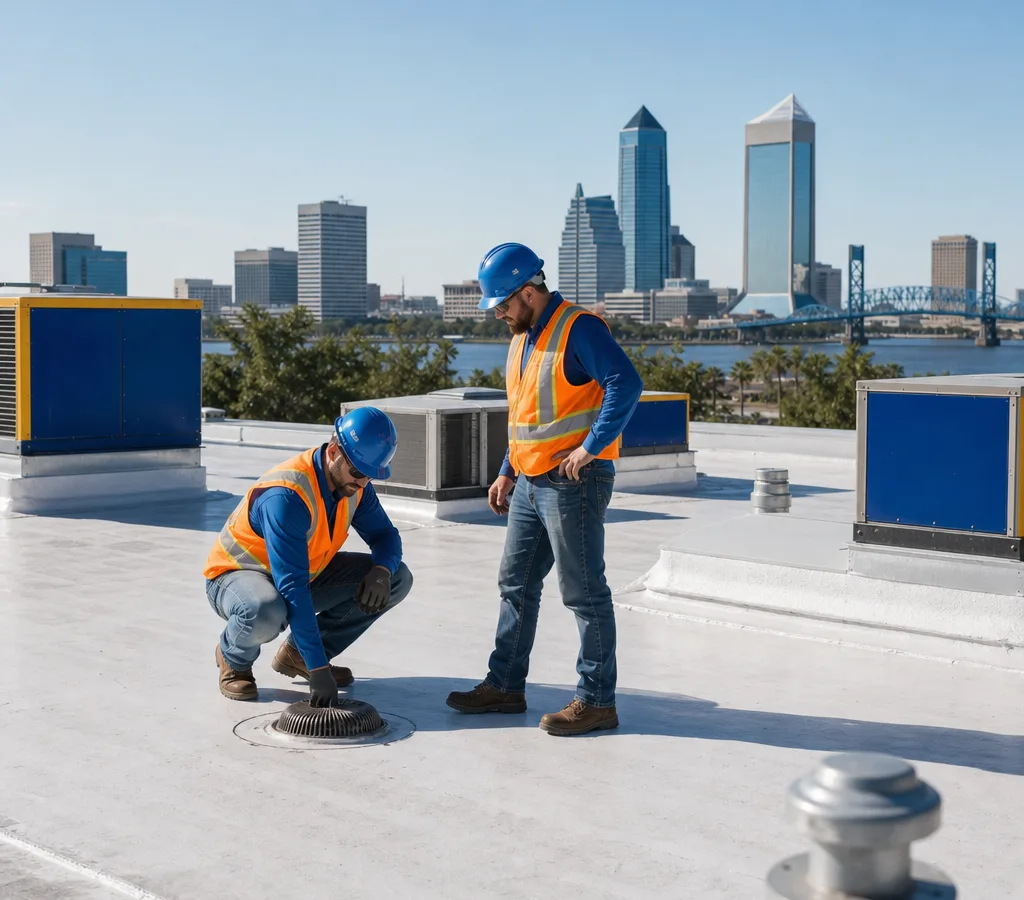
Inspection-led commercial roofing
If you are searching for commercial roofers Jacksonville FL, you usually need one of three things: stop an active leak, extend the life of an aging system, or replace a roof that no longer pencils out to keep patching. Roofing Jacksonville Florida works on commercial buildings across Jacksonville where flat and low-slope roof details, rooftop equipment, and drainage make the difference between a quick fix and a repeat problem.
A commercial roof is a system, not just a surface. Most leaks trace back to transition points: pipe penetrations, HVAC curbs, parapet walls, roof drains and scuppers, expansion joints, and old flashing. Our inspections focus on those details first, then on the field membrane, insulation condition, and signs of trapped moisture. You get a straightforward scope so you can approve the right level of work for your building, budget, and timeline.
For property managers and business owners, the goal is simple: fewer surprises. That starts with documenting what is actually failing, prioritizing the repairs that prevent interior damage, and planning larger work around your operating hours and tenants.
Repairs, maintenance, and replacement
Trace leaks to the source with a roof-top inspection that checks drains, flashing lines, penetrations, and rooftop equipment transitions, then propose the repair that matches the failure.
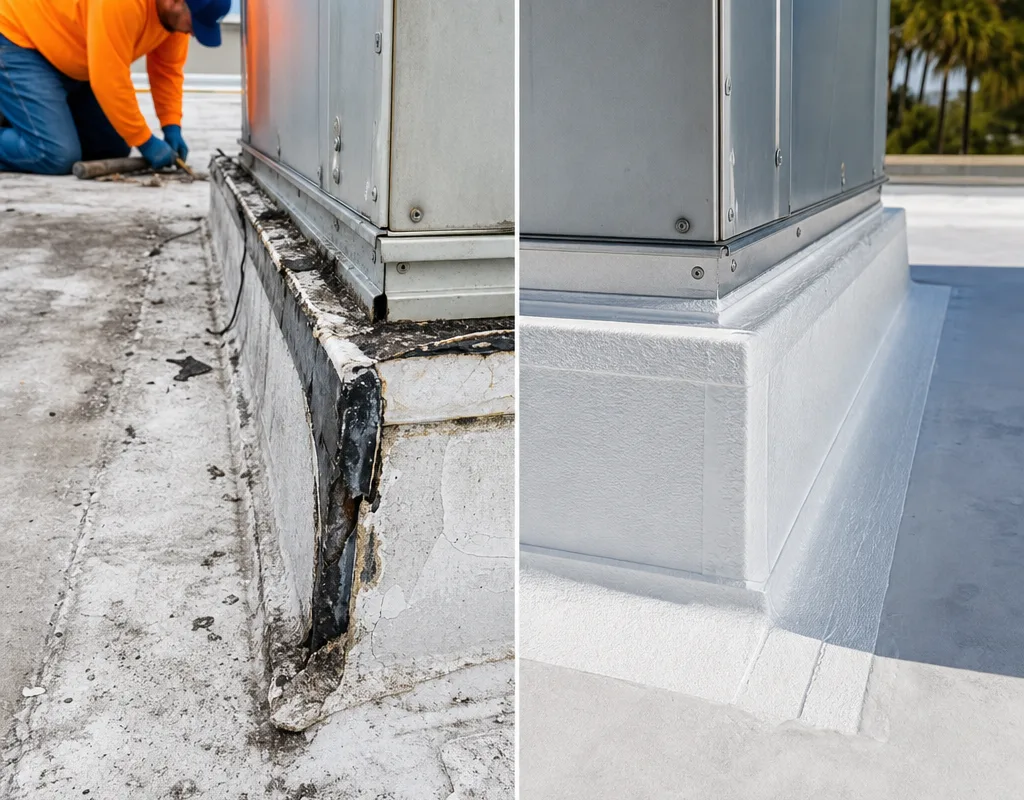
Targeted membrane repairs, flashing replacements, pipe boot work, and sealant corrections focused on the details that typically reopen during Florida heat and heavy rain.
Routine roof walks to clear debris at drains, spot early seam or flashing issues, and keep small problems from turning into emergency interior work.
For roofs that are structurally sound but weathered, restoration can be a cost-effective path when the existing assembly and drainage layout support it.
Remove and replace failing systems with the right insulation and membrane choice for your building's use, rooftop traffic, and drainage realities.
Photo documentation and written observations that help you communicate conditions clearly after wind-driven rain events and severe weather.
Roof condition and drainage
A useful commercial roof inspection gives you more than a quick opinion. It should identify the roof type—common flat and low-slope systems include TPO, PVC, EPDM, modified bitumen, and built-up roofing—call out where water is getting in, and note anything that will affect a repair or replacement scope.
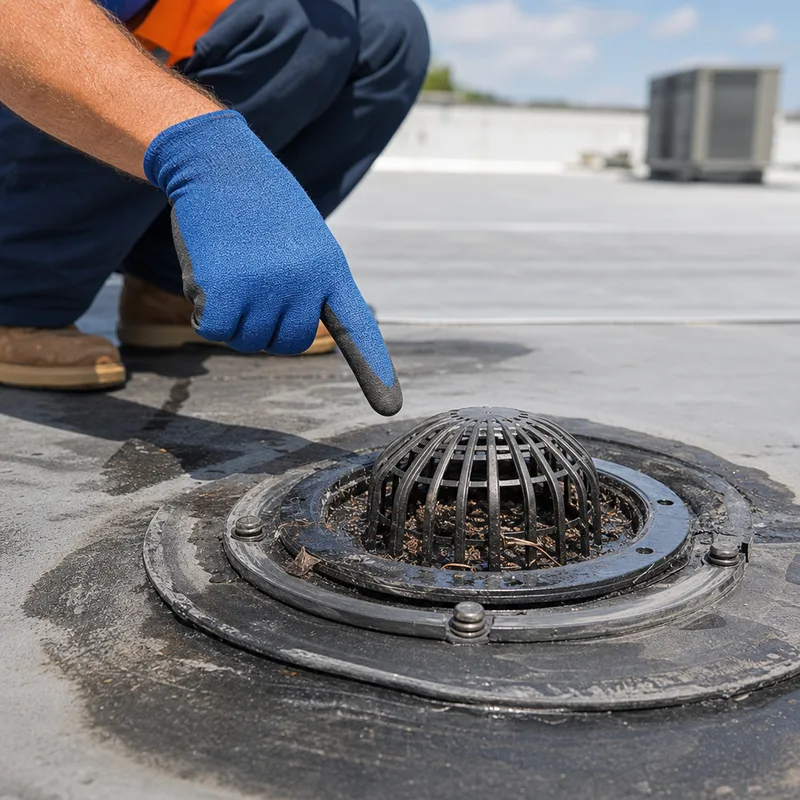
On Jacksonville buildings, drainage is often the first practical checkpoint because intense rain can overwhelm small clogs fast. We look for ponding areas, blocked roof drains, deteriorated drain bowls, failing scupper boxes, and low spots that keep water against seams and flashing. We also check penetrations and rooftop units for movement and vibration, because those stresses can open up older sealant and flashing lines.
You should expect clear photos, a written plan with priorities—urgent leak items versus planned work—and options when there is more than one responsible way to solve the problem. If replacement is on the table, we also discuss how the work affects rooftop equipment, access paths, and staging so your operations keep running.
Jacksonville commercial properties
Jacksonville's weather is hard on commercial roofs. Heat and UV accelerate aging on exposed membranes and coatings, and wind-driven rain finds weak flashing quickly. That is why the repair approach matters as much as the repair material: surface sealant alone rarely lasts if the underlying flashing detail is loose, wet, or moving.
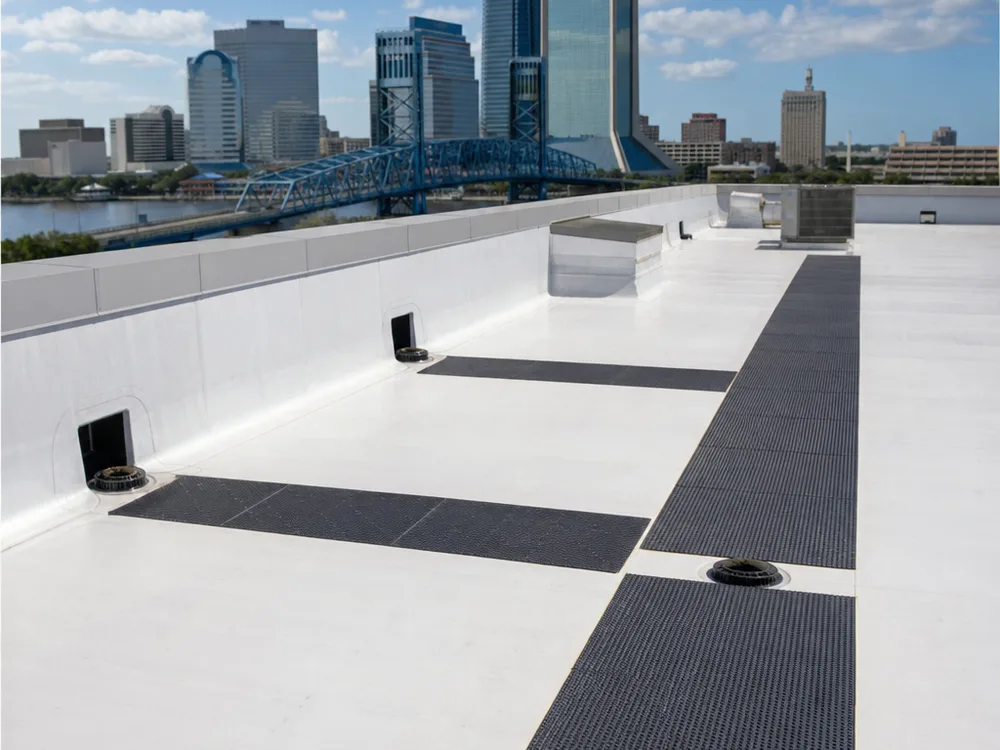
Building use and roof traffic also change the right solution. Warehouses and distribution spaces often have frequent rooftop access for HVAC and communications gear, which raises the importance of walkway pads and durable flashing at curbs and supports. Retail and office properties tend to have more tenant sensitivity to noise and odors, so scheduling, staging, and clean work areas become part of the plan.
We regularly work across Jacksonville's commercial corridors, including Downtown with denser rooftops and more mechanical equipment, Southside with large retail and office footprints, and the Arlington and Mandarin areas with mixed-use properties where maintenance scheduling matters. Wherever the building sits, the same fundamentals apply: keep water moving to drains, keep transitions watertight, and match the scope to the roof's remaining service life.
If you are comparing companies, start with basics that protect you: written scope, clear exclusions, safety planning for occupied buildings, and a realistic timeline that accounts for weather windows. For an overview of our company and service area, you can review Roofing Jacksonville Florida.
We confirm safe access, identify sensitive areas such as tenants, loading zones, and HVAC intakes, and plan where crews and materials can stage with minimal disruption.
We inspect membranes, seams, flashings, penetrations, curbs, parapets, and drainage points, then document conditions with photos and notes you can share internally.
You receive a written scope with the highest-risk items first, plus options when the roof condition allows different paths: repair, restoration, or replacement.
We coordinate the work window to reduce impact on tenants and staff, including noise, parking, and rooftop equipment access needs.
Repairs and installs follow manufacturer details and commercial best practices, with final checks at transitions and drainage before the job is closed out.
Commercial roofing budgets
Commercial roofing in Jacksonville typically ranges from about $750 to $3,500+ for common leak repairs, while larger restoration work often runs $3 to $8 per square foot and full replacement commonly lands around $6 to $14+ per square foot, depending on the system and tear-off needs. Pricing changes with roof size, number of penetrations and curbs, access and staging, how much wet insulation must be removed, and the membrane type and warranty requirements. The exact cost is confirmed after an on-site inspection and a written scope.
Commercial roof details
Property manager questions
Response timing depends on weather and roof access, but active leaks are prioritized and typically start with a same-day or next-available inspection so we can identify the source and stabilize the area. For many buildings, the first visit focuses on stopping interior impact, then a second scheduled scope handles full flashing or membrane corrections once surfaces are dry enough for lasting work.
Most Jacksonville commercial roofs we see are flat or low-slope systems such as TPO, PVC, EPDM, modified bitumen, and built-up roofing. The right repair method depends on the existing membrane type, seam condition, and whether moisture is trapped in the insulation or cover board.
A coating can be a good option when the roof is fundamentally sound, drainage works, and leaks are not coming from widespread wet insulation or failing details. If the roof has recurring ponding, open seams, or saturated areas, coatings alone usually do not solve the underlying problem and can complicate later repairs.
A solid proposal should list the roof areas included, the exact repair or replacement details—especially at penetrations, curbs, parapets, and drains—any tear-off assumptions, and how the work will be staged on an occupied property. It should also clarify what is excluded, what conditions could change the scope, such as hidden wet insulation, and what documentation you will receive at closeout.
Disruption is managed through scheduling, staging, and containment. We coordinate access routes, protect entrances and loading areas, plan noisy work for appropriate windows, and pay attention to HVAC intake locations when using adhesives or solvents so building air systems are not affected.
Water can travel along the underside of the membrane, across decking, or around structural members before it appears inside. That is why inspection focuses on high-risk details like drains, seams, and penetrations rather than assuming the interior stain is directly below the entry point.
Start with an on-site inspection
Tell us what you are seeing on the roof or inside the building, and we will schedule an inspection, document the condition, and provide a written scope you can act on.