Root-cause diagnosis, not surface patching
We trace the leak path, inspect the flashing system, and verify the repair area so you are not paying for repeated visits on the same issue.
Serving Jacksonville, Florida & surrounding areas
24/7 Response • Answered live
One call instead of ten No web forms, no callback spam Booking Fall & Winter 2026
Roof repair · Jacksonville Beach, Florida
Stop leaks fast, protect your decking and insulation, and get a repair that matches your roof system and stands up to salt air and storm season.
✓ Skip the 3-hour Google rabbit hole — we’ve already done the vetting
✓ One conversation, not ten voicemails and seven web forms
✓ 24/7 response — talk to a real person who actually knows Jacksonville
Coastal leak repair
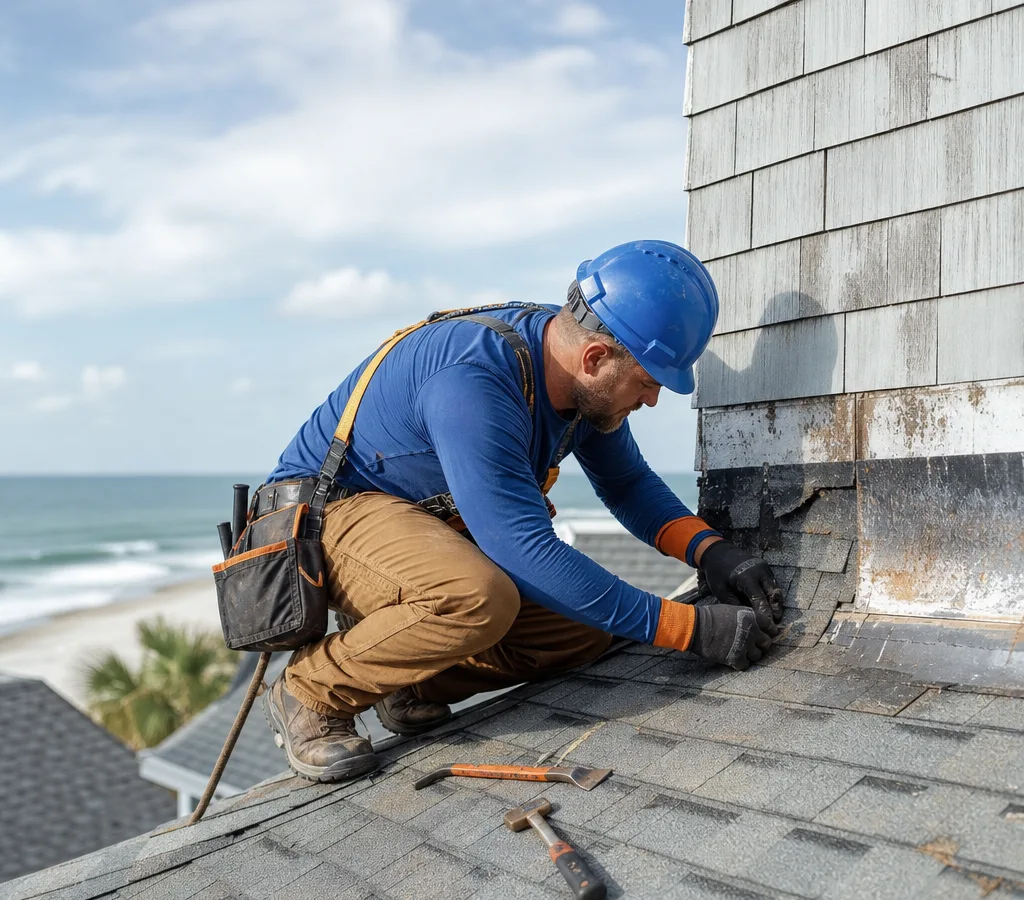
If you are searching for roof repair Jacksonville Beach FL, you are usually dealing with one urgent problem: water getting where it should not. In Jacksonville Beach, that can start as a small leak around a vent boot or flashing, then turn into swollen decking, stained ceilings, and mold risk once humidity gets involved.
Roofing Jacksonville Florida handles repair work designed for Northeast Florida conditions: wind-driven rain, summer heat, and salt air that speeds up metal corrosion. We focus on pinpointing the true entry point—often not directly above the stain—documenting what we find, and recommending the smallest repair that solves the problem for the long term.
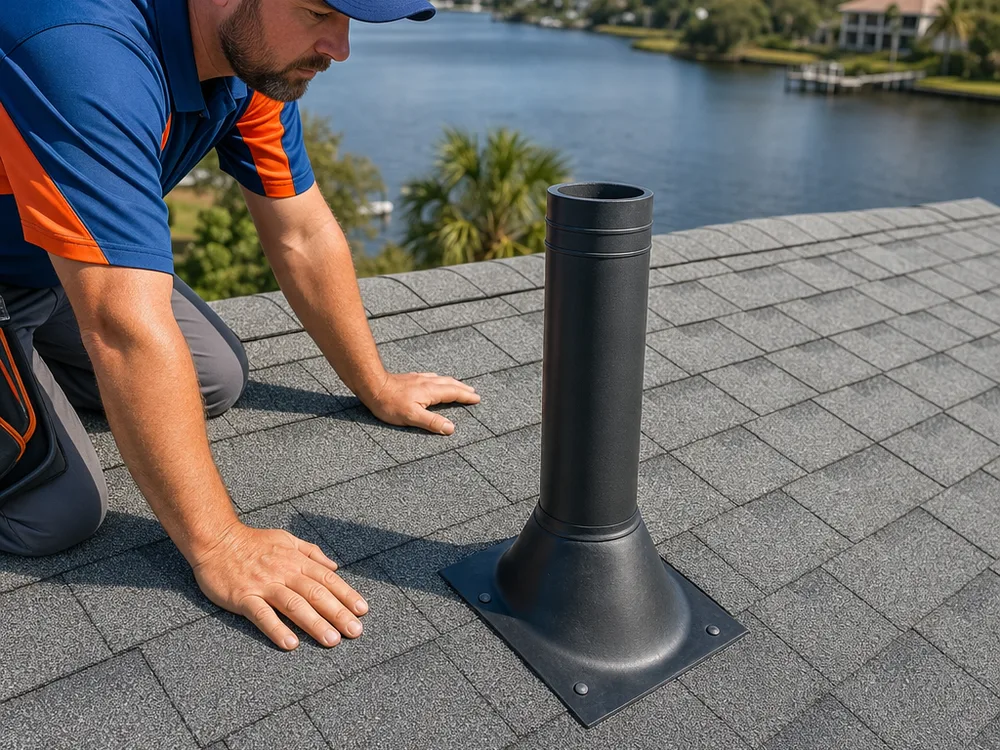
Many homes near the beach have complex roof penetrations and transitions: plumbing vents, bath fan caps, step flashing where roofs meet walls, and drip edges at eaves. Those are common failure points, and they are also the areas where a careful, system-based repair makes the difference between a short-term patch and a durable fix.
Targeted leak inspection
Most roof leaks are caused by details, not the field shingles. Our inspection starts with the areas that fail most often in Jacksonville Beach wind and rain.
Common roof repair items we handle:
We also check attic conditions when accessible. Wet insulation, darkened decking, and rusty nail points help confirm where water has been traveling, which matters because the stain you see inside is rarely the exact entry point.
Professional repair standards
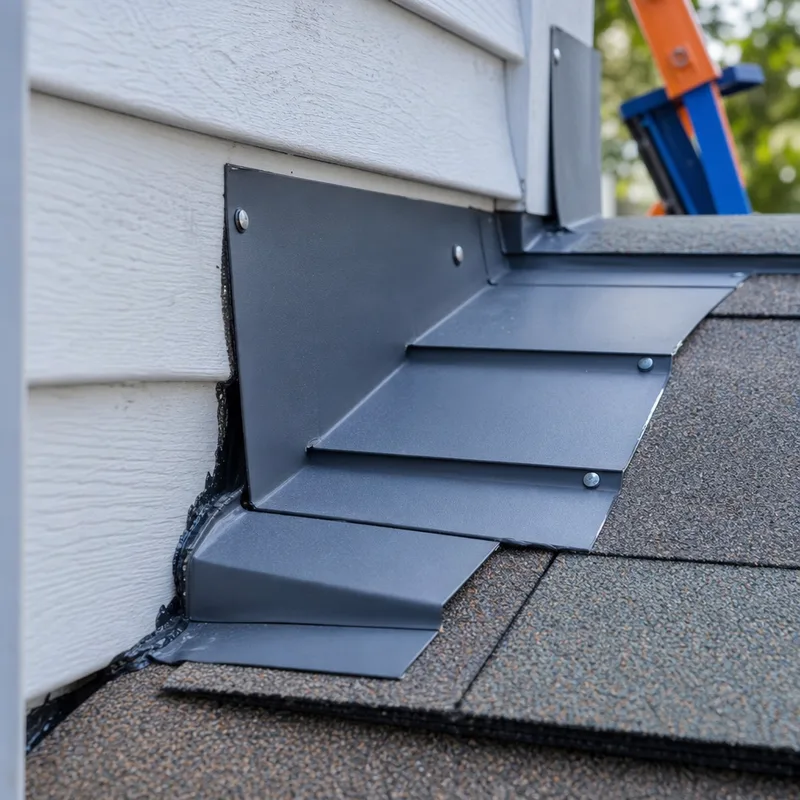
We trace the leak path, inspect the flashing system, and verify the repair area so you are not paying for repeated visits on the same issue.
Shingle type, underlayment, and flashing details matter. A correct repair ties into the layers the way the roof was meant to shed water.
Edge details, fastener placement, and sealant selection are critical in coastal wind-driven rain. We build the repair to resist uplift and intrusion.
We protect landscaping where possible, keep the work area organized, and perform a final sweep for debris around the perimeter.
You get a written explanation of what is being repaired, why it failed, and what we recommend next if we spot related wear nearby.
Inspection to completion
We start by understanding what you are seeing inside, then evaluate roof access, pitch, and any storm-related hazards before stepping onto the roof.
We inspect penetrations, transitions, and the surrounding shingle field. If needed, we check the attic side for moisture trails that confirm the leak path.
You receive a straightforward scope that calls out the repair location, materials involved—flashing, underlayment, and shingles—and any limits if the roof has widespread wear.
We complete the repair so each layer overlaps correctly and directs water onto the next surface. If matching shingles are available, we blend the repair for a consistent finish.
We clean the area, review what was fixed, and explain what to watch for after the next hard rain so you feel confident the problem is resolved.
Repair budget planning
Most roof repair jobs in Jacksonville Beach typically range from about $250 to $1,250, depending on the leak source and how much material has to be removed and reinstalled. A small flashing or vent-boot repair is often on the low end, while valley work, multiple leak points, or limited decking replacement can push costs higher.
Your final price depends on roof height and pitch, access, the roof material and age, how far water traveled under the shingles, and whether matching materials are available. The exact cost is confirmed after an on-site inspection and a written scope.
Repair workmanship
Coastal climate context
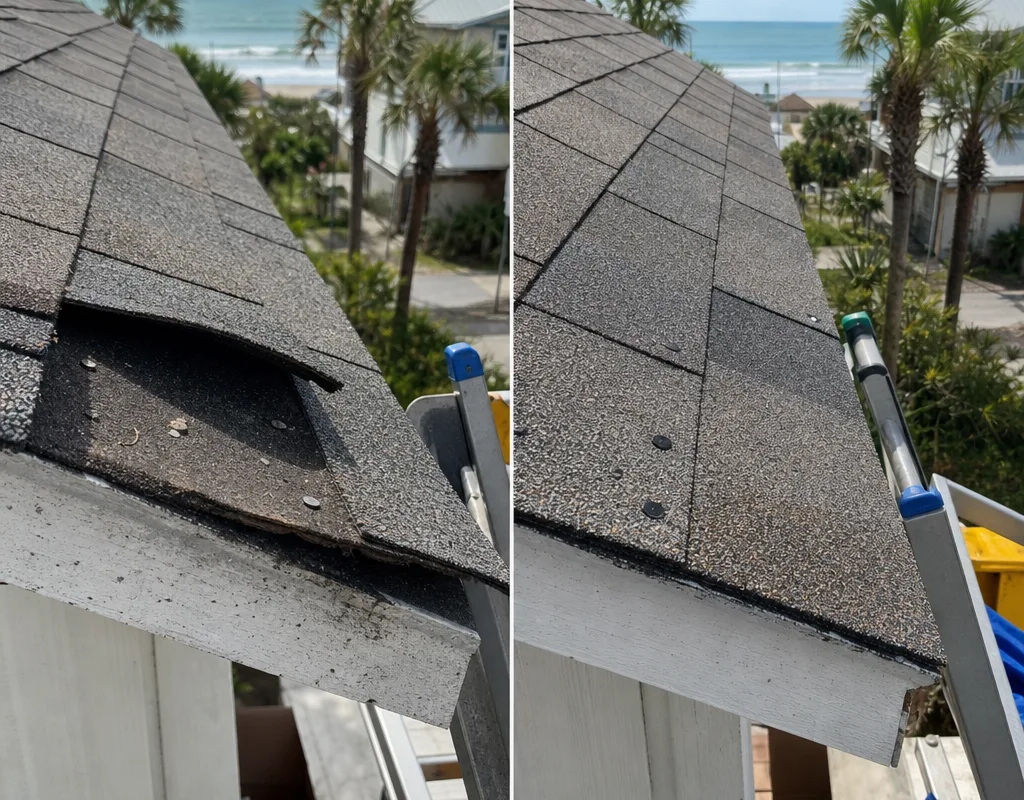
Jacksonville Beach roofs deal with coastal conditions that change how repairs should be done. Salt air accelerates corrosion on exposed metal components, so we pay close attention to flashing condition, fasteners, and any signs of rust at penetrations and transitions. Wind-driven rain can push water sideways and uphill under shingles, which is why correct underlayment tie-ins and properly layered flashing matter more than a heavy bead of sealant.
If your home is on or near A1A, exposure tends to be harsher and details age faster, particularly at drip edges and vent flashings. In South Jacksonville Beach and Ponte Vedra Beach-adjacent areas, we often see roof planes with strong sun exposure and higher heat load, which can dry out sealants and weaken shingle adhesion over time.
If you are also comparing providers closer to downtown Jacksonville, our roofing in Jacksonville, FL team is based in Jacksonville and schedules repair work in Jacksonville Beach based on urgency and weather windows. The goal is simple: stop the leak quickly and repair it in a way that does not create the next problem.
Homeowner questions
Active leaks are prioritized, and we schedule the earliest practical inspection window based on weather and safe roof access. If heavy rain or high wind is in the forecast, we focus on identifying the entry point and recommending the safest short-term protection plan until a permanent repair can be completed.
No, the entry point is often several feet away because water can travel along underlayment, decking seams, rafters, or trusses before it drips into the room. That is why we inspect common entry points like valleys, vent flashings, and roof-to-wall transitions instead of guessing from the interior stain location.
Yes, if the damage is localized and the surrounding shingles and underlayment are still doing their job, a targeted repair is usually appropriate. We confirm whether replacement shingles can be matched and whether the roof has broader wear that would limit how long a spot repair will last.
The most common sources are failed pipe boots, worn or improperly layered flashing at walls and chimneys, and damage at valleys and ridge caps after high winds. Coastal exposure can also speed up deterioration of metal components, which is why flashing condition is a major part of our inspection.
Stopping the leak stops the ongoing water source, which is the key step in preventing continued damage. After the roof is watertight, the next priority is drying affected insulation and interior materials promptly, since Jacksonville Beach humidity can keep trapped moisture from drying out on its own.
Yes, you will receive a clear written description of what is being repaired, the materials involved, and any related concerns we observe in the same area. That written scope helps you compare options and understand what the repair does and does not include.
Start with an on-site inspection
Send a few details about what you are seeing, and we will schedule an inspection, identify the leak source, and provide a written repair plan built for coastal Florida conditions.