Inspection notes you can follow
We check penetrations, flashing, valleys, ridges, and transitions. You get a written scope so you can make decisions with real information, not guesses.
Serving Jacksonville, Florida & surrounding areas
24/7 Response • Answered live
One call instead of ten No web forms, no callback spam Booking Fall & Winter 2026
Jacksonville Beach, Florida roofing service
Get a clear roof plan, a written scope, and workmanship you can trust for coastal Florida weather. We handle inspections, repairs, and full replacements with professional crews and straightforward estimates.
✓ Skip the 3-hour Google rabbit hole — we’ve already done the vetting
✓ One conversation, not ten voicemails and seven web forms
✓ 24/7 response — talk to a real person who actually knows Jacksonville
Coastal roofing guidance
If you are searching for roofers Jacksonville Beach FL, you are usually trying to solve one of two problems: a roof that is actively leaking, or a roof that is aging and you need honest guidance before you spend money.
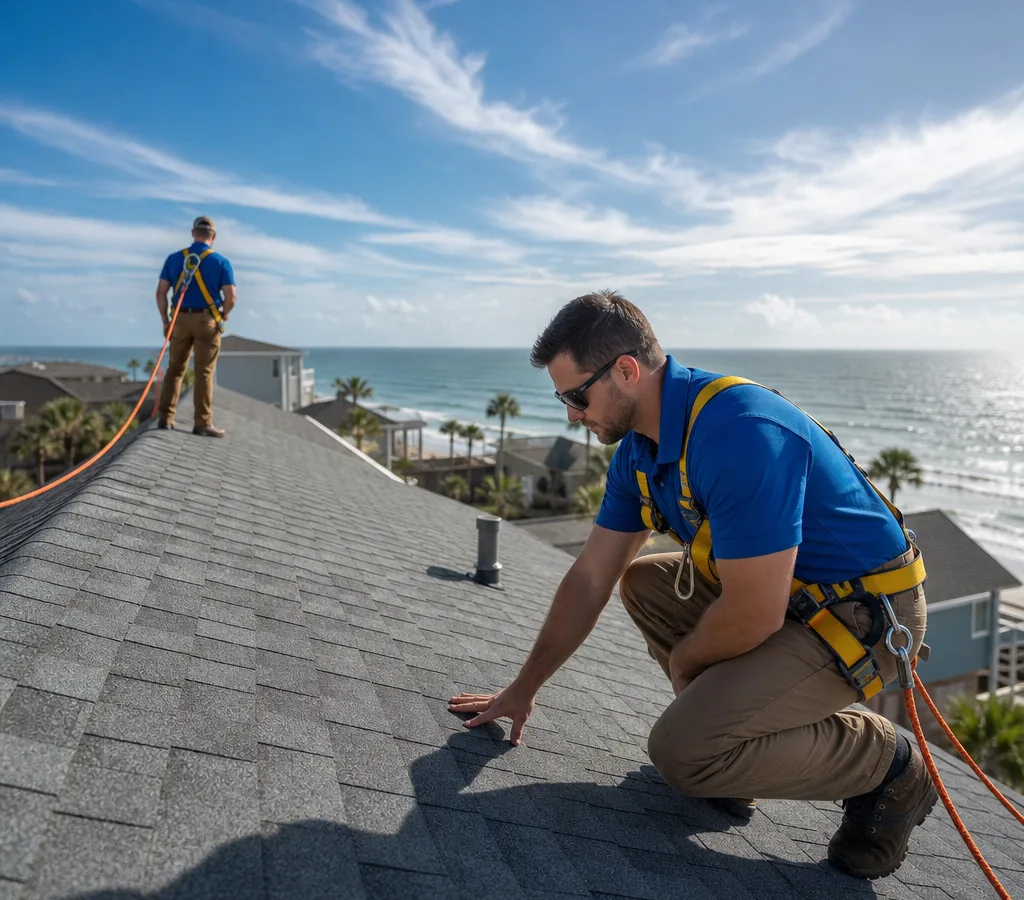
Jacksonville Beach roofs take a different kind of wear than many inland neighborhoods. Salt air can accelerate corrosion on exposed metals, afternoon storms can find weak flashing fast, and high winds test the edges, ridges, and any areas where the roof meets walls. That is why our first step is always the same: a careful inspection that documents what is working, what is failing, and what can be repaired versus what should be replaced.
Roofing Jacksonville Florida serves Jacksonville Beach and nearby areas from Jacksonville (32202). If you want a roofer who will explain what they see in plain language and put it in writing, our team is ready to help.
Clear expectations
We check penetrations, flashing, valleys, ridges, and transitions. You get a written scope so you can make decisions with real information, not guesses.
A roof leak is often a flashing or fastener issue, not a single missing shingle. We focus on the entry point, surrounding materials, and water path.
Shingles, underlayment, drip edge, and ventilation work as a system. We quote the system components, not just the surface layer.
Roof work is disruptive. We plan staging, protect landscaping where possible, and keep the property safer and cleaner day to day.
If a repair is likely to buy you time, we will say so. If the roof is at the point where repairs stack up, we will explain why replacement pencils out.
Repair, replacement, and storm checks
Most requests fall into a few buckets, and each one needs a slightly different approach.
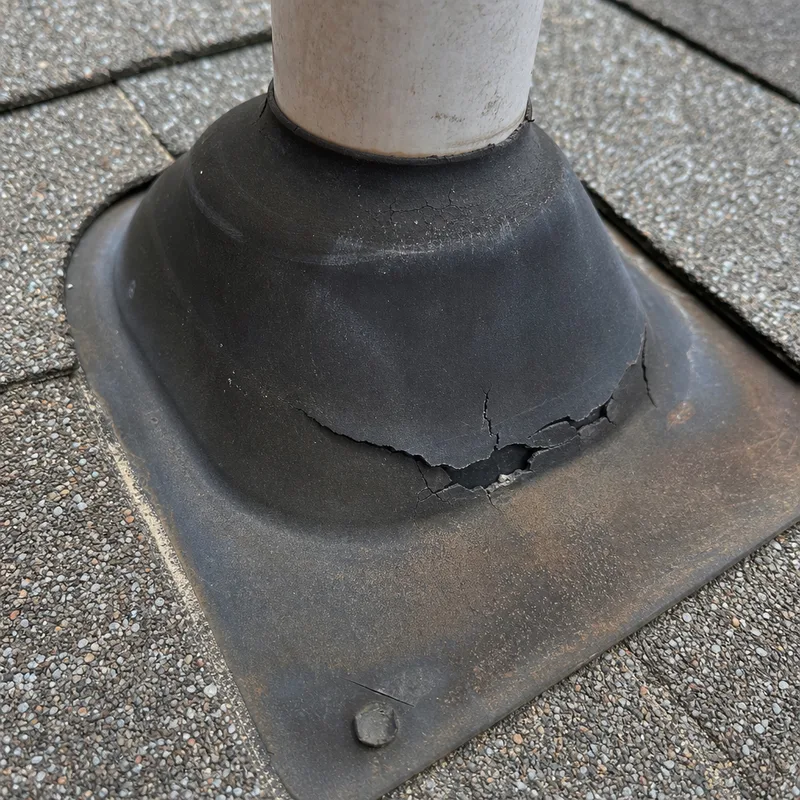
Leak diagnosis and roof repair: We start by finding the true entry point. Common sources include pipe boots, step flashing at sidewalls, chimney or skylight flashing, ridge caps, and nail pops. We look for soft decking, stained underlayment, and deteriorated sealants, then repair with compatible materials.
Full roof replacement: If shingles are curling, granules are washing out, or the roof has repeated leak points, replacement may be the most reliable option. A replacement quote should specify tear-off, deck evaluation, underlayment type, flashing/drip edge details, ventilation approach, and cleanup.
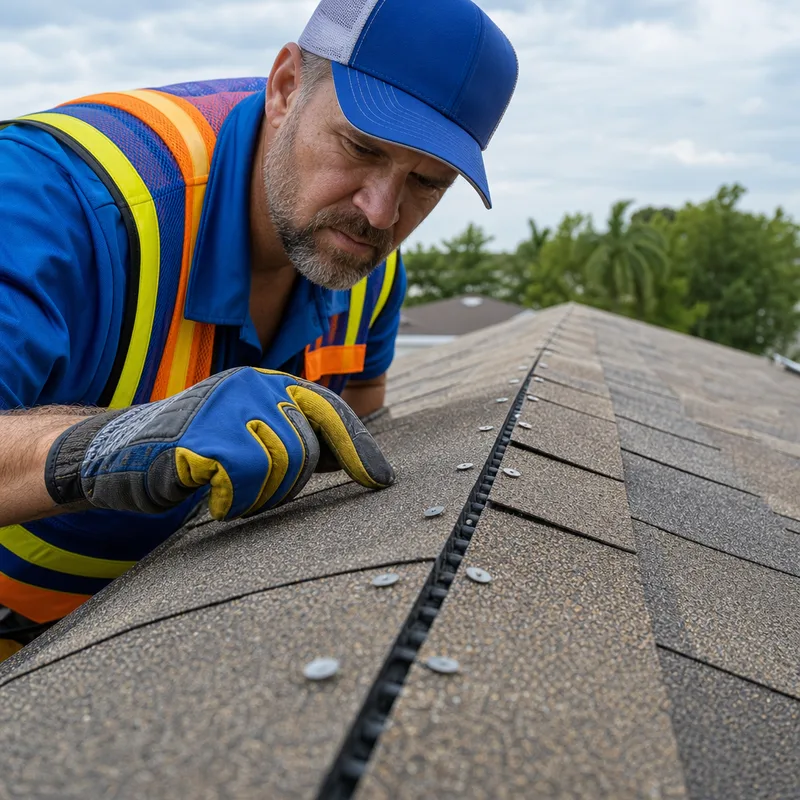
Storm and wind damage checks: After rough weather, we look for lifted shingles, creased tabs, exposed nails, and damaged ridge/hip caps. We also check metal components for corrosion or fastener back-out, which can be more common near the coast.
If you are comparing contractors, start with the basics: a written scope, clear exclusions, realistic schedule expectations, and documentation of what will be replaced around penetrations and roof-to-wall transitions.
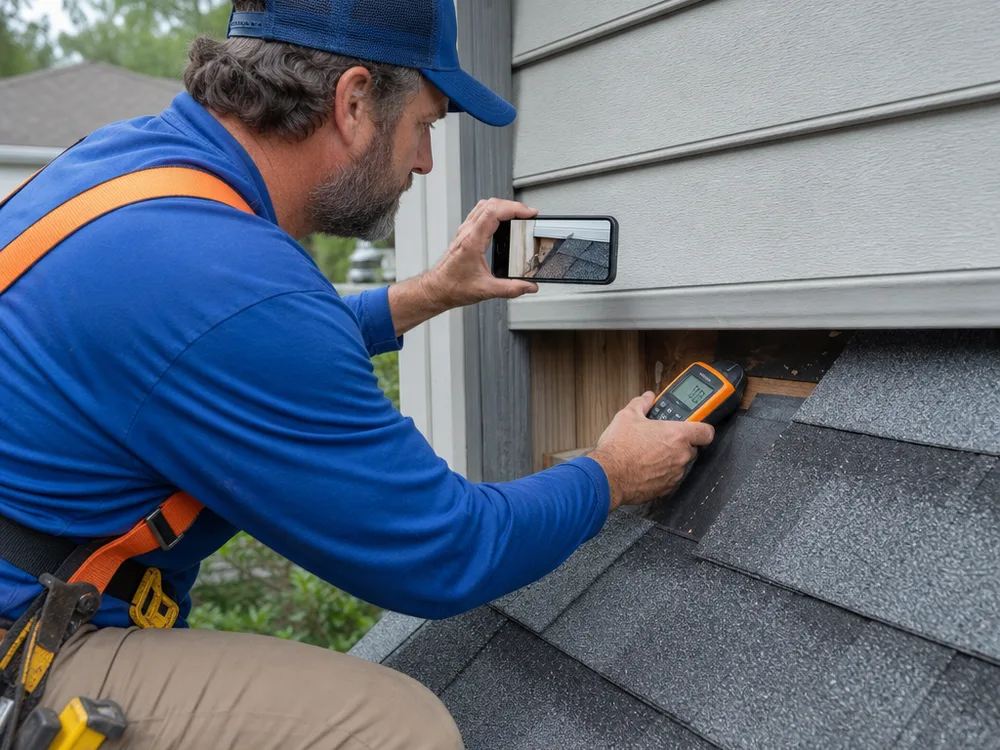
We inspect the roof surface, flashings, penetrations, and visible attic/ventilation conditions when accessible. We note safety/access limitations that affect labor and staging.
You get a clear scope that lists the work areas and materials, plus what is excluded. If there are options—repair versus replacement or underlayment levels—we outline the tradeoffs.
We coordinate timing, delivery, and site protection. For replacements, we plan tear-off, deck review, and weather monitoring so the roof is not left exposed.
Repairs focus on the entry point and surrounding materials. Replacements follow the specified system build, including flashing and ventilation details, with jobsite cleanup throughout.
We review the completed work with you, answer questions, and confirm the scope was met. If we found any deck issues during tear-off, we document what was replaced and why.
Budget planning
Roofing in Jacksonville Beach typically ranges from about $250 to $900 for many common repairs, while a full roof replacement often lands around $9,000 to $22,000+ depending on size, pitch, material choice, and tear-off needs.
Your final price depends on roof complexity—valleys, dormers, and steep slopes—the condition of decking and flashing, how many layers must be removed, ventilation adjustments, and access for staging and debris hauling. The exact cost is confirmed after an on-site roof inspection and a written scope.
Coastal roof details
Jacksonville Beach homeowners
“They showed me exactly where the leak was coming from and why the stain inside didn't match the entry point. The repair was straightforward, and the written scope matched what they actually did.”
“I appreciated the clear estimate. They didn't push a replacement when a targeted repair made sense, and they explained what to watch for over the next storm season.”
Homeowner questions
Response time depends on weather and workload, but active leaks are usually prioritized because water intrusion can damage insulation, drywall, and decking quickly. If rain is ongoing, a temporary tarp or water-diversion step may be the safest first move, followed by a permanent flashing or shingle repair once conditions allow.
Recurring leaks are often tied to flashing details and corrosion, not the shingle field itself. Roof-to-wall step flashing, pipe boots, and exposed fasteners can fail faster in salt air and wind-driven rain, and a previous patch may have sealed the symptom rather than the actual entry path.
You can often repair a roof when the problem is isolated to a few components like flashing, a small area of damaged shingles, or a single penetration. Replacement is more likely when the roof has widespread wear, repeated leak points, or brittle materials that cannot be reliably sealed. An on-site inspection should document which areas are failing and why.
A comparable estimate lists the exact work areas, the roof system components being installed—underlayment, drip edge, flashing approach, and ventilation plan—tear-off and disposal, and how decking issues are handled if discovered. If the scope is vague on flashings and penetrations, it is hard to know what you are actually buying.
Sometimes, but an exact match is not always possible due to weathering, discontinued shingle lines, and dye-lot differences. A good repair plan discusses appearance expectations up front and focuses on a watertight detail at the repair area, especially around flashings and transitions.
Permitting depends on the scope of work, with full replacements more likely to require permits than minor repairs. Requirements can change, so we review the job scope with local expectations in mind and confirm what applies before work starts.
Start with a clear inspection
Tell us what you are seeing—leak location, age of the roof, and any recent storm issues—and we will schedule an inspection, provide a written scope, and walk you through repair and replacement options. You can also learn more about our team at Roofing Jacksonville Florida.