A real roof inspection, not a quick glance
We check decking condition, soft spots, moisture staining in the attic when accessible, and the condition of existing flashing so the scope matches what the roof actually needs.
Serving Jacksonville, Florida & surrounding areas
24/7 Response • Answered live
One call instead of ten No web forms, no callback spam Booking Fall & Winter 2026
Metal roofing · Jacksonville, Florida
Upgrade to a roof built for Florida heat, heavy rain, and coastal wind. Get a clear inspection, straightforward options, and a clean install from start to finish.
✓ Skip the 3-hour Google rabbit hole — we’ve already done the vetting
✓ One conversation, not ten voicemails and seven web forms
✓ 24/7 response — talk to a real person who actually knows Jacksonville
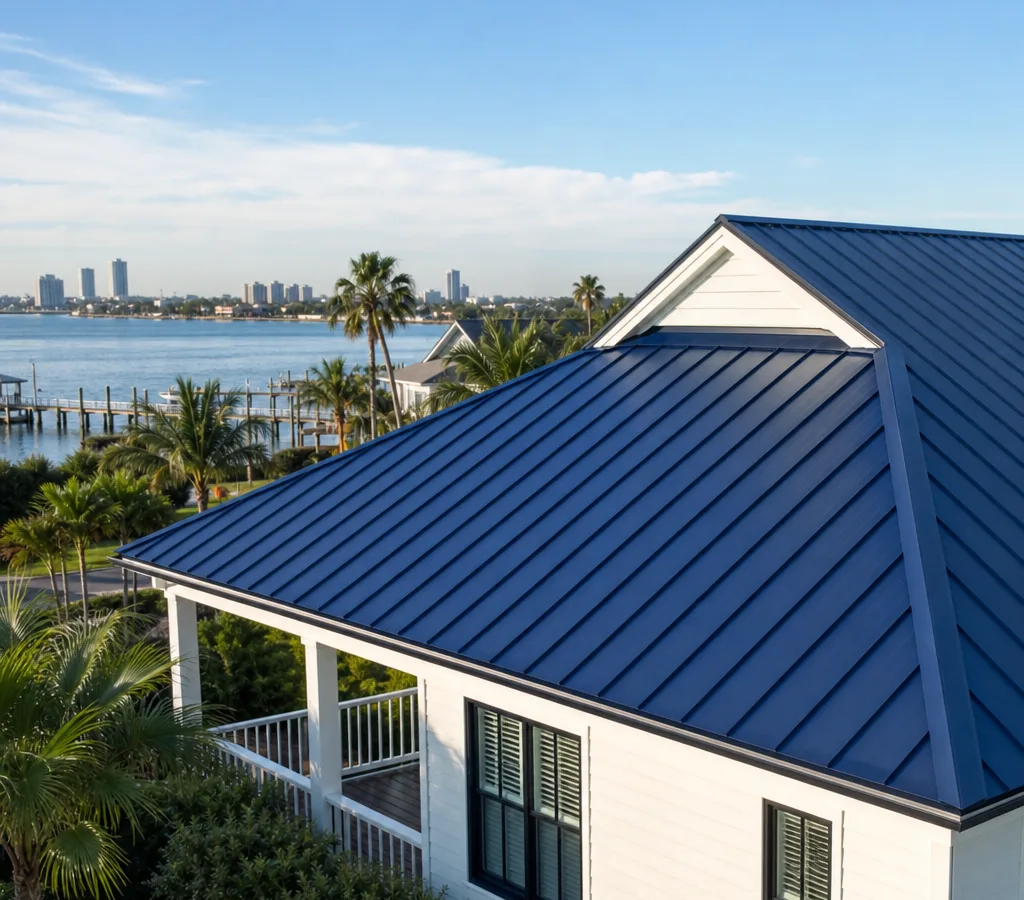
Built for Northeast Florida
If you are searching for metal roofing Jacksonville FL, you are probably looking for a roof that lasts, sheds water fast, and holds up in storms. Metal roofing is a strong match for Northeast Florida conditions because it is installed as a tested system: the panels, underlayment, flashing, and ventilation details all have to work together.
Roofing Jacksonville Florida installs and replaces metal roofing in Jacksonville, including standing seam and exposed fastener systems. We start with a roof inspection and a written scope so you know what is being replaced, what can stay, and what details matter most on your specific roof planes, valleys, walls, and penetrations.
Jacksonville homes vary a lot by neighborhood and era, and that changes the approach. In Riverside and Avondale you often see older roof lines and lots of transitions where careful step flashing and wall tie-ins matter. Out at the Beaches, salt air makes finish selection and fastener quality a bigger decision. In newer communities around Nocatee and along the Southside, you often see larger, simpler roof planes where panel layout, clip spacing, and clean ridge and hip lines are the priority.
If you are comparing contractors for any roof type, our team at Roofing Jacksonville Florida can walk you through metal options and what they mean for your home's details, not just a generic product pitch.
Compare metal roof systems
Metal roofing is not one product. The right choice depends on roof pitch, complexity, budget, and the look you want.
This is a concealed-fastener system with vertical seams. It is a common pick when you want a clean finish and fewer exposed penetration points on the field of the roof. It also works well on long runs where consistent panel layout and expansion details matter.
This uses screws with sealing washers through the panel ribs or flats depending on the profile. It can be a good fit for certain residential and light commercial roofs when the scope is straightforward and the owner wants a more cost-conscious system. Good install practices matter here: correct screw type, proper seating, and clean closure details at eaves and ridges.
Some homeowners want the durability of metal with a more traditional shingle-style look. These systems have their own accessory and flashing requirements, and they still depend on a correct underlayment and ventilation plan.
Whichever system you choose, the lifespan you get depends on the details people do not notice from the street: underlayment selection, pipe boots, wall flashing, drip edge, and how valleys and transitions are handled.
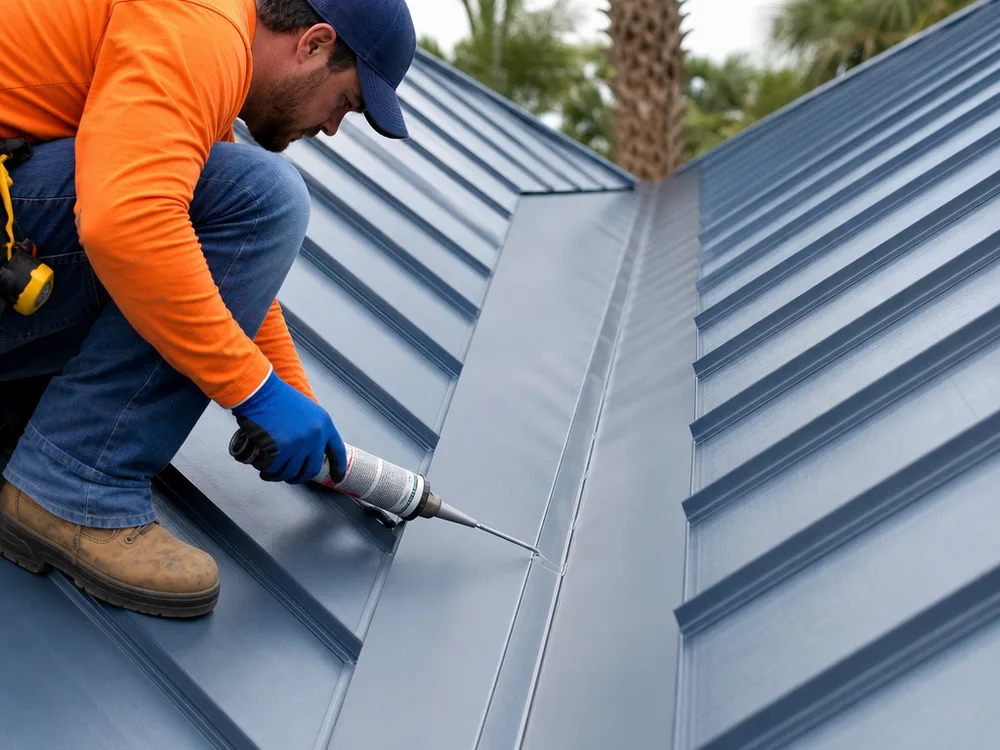
Complete roof assembly
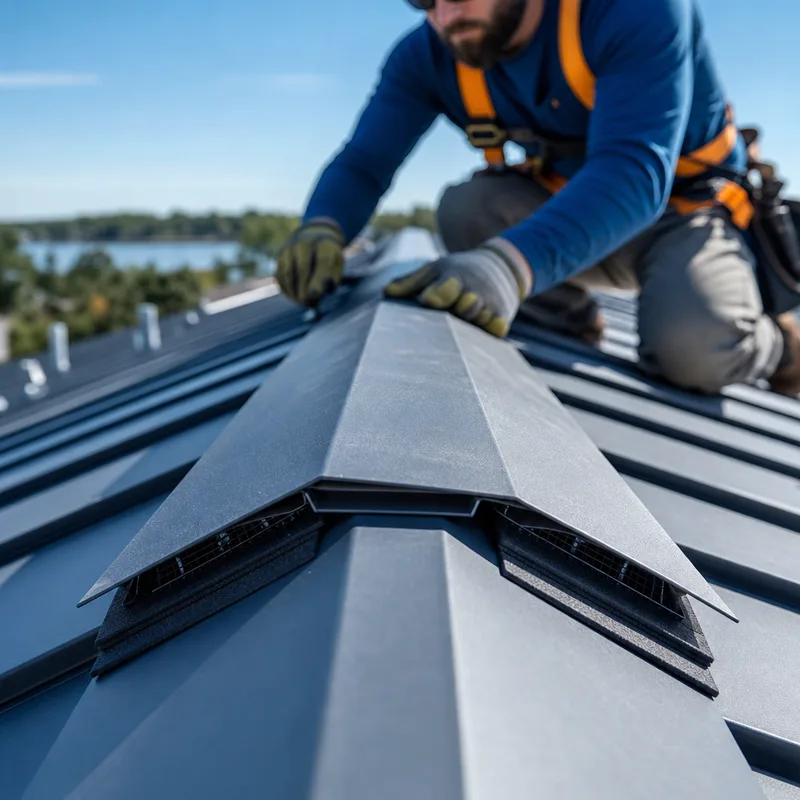
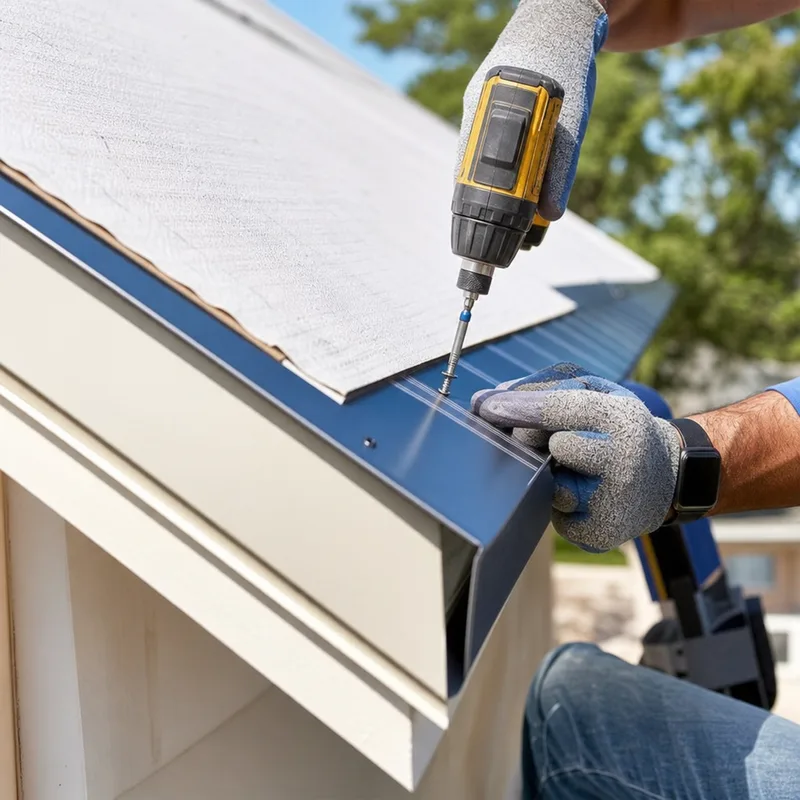
We check decking condition, soft spots, moisture staining in the attic when accessible, and the condition of existing flashing so the scope matches what the roof actually needs.
Underlayment choice depends on the roof type and details. The goal is a continuous, properly lapped secondary water-shedding layer beneath the metal system.
Chimneys, sidewalls, headwalls, skylights, and valleys are where leaks start. We build these details to fit the structure, not to “make it work” with leftover pieces.
Florida attics run hot. We look at intake and exhaust paths so the metal roof assembly is not fighting trapped heat and moisture.
Straight courses, consistent trim lines, and careful cleanup around landscaping and driveways. Magnet sweeping and debris control are part of a professional metal roof job.
Inspection to walkthrough
We document roof planes, penetrations, transitions, and drainage paths. If there are problem areas, we note what is driving them—flashing failure, fastener issues, degraded underlayment, or substrate problems.
You get a clear scope with the metal roof system type, key accessories, and the details that will be rebuilt. We also flag any items that can change once tear-off starts, such as hidden decking damage.
We protect landscaping and set up disposal. If the project includes tear-off, we remove existing roofing and inspect the deck before new layers go down.
We install the underlayment correctly lapped and sealed as required, then build out drip edge, valleys, wall flashings, boots, and the panel system with the right fastening method for the product.
We verify closures and trim, check penetrations, and leave the property clean. You get a straightforward explanation of what was installed and what to watch for over time.
Budget planning
Metal roofing in Jacksonville typically ranges from about $12 to $25+ per square foot installed, depending on the system and roof complexity. Exposed-fastener panels are often on the lower end, while standing seam and higher-end profiles trend higher, especially with more valleys, dormers, and wall transitions.
Your final price depends on tear-off requirements, decking repairs, panel gauge and finish, underlayment choice, access and staging, and how many penetrations and flashing details must be rebuilt. The exact cost is confirmed after an on-site roof inspection and measurements.
Homeowner questions
Standing seam is often preferred when you want a cleaner look and fewer exposed fasteners on the field of the roof, but exposed fastener systems can still perform well when installed correctly for the roof design. The better choice depends on roof pitch, how many transitions and penetrations you have, and how much long-term maintenance you want to plan for.
Some metal systems can be installed over an existing roof, but it is not always the right call in Jacksonville. Tear-off is often recommended when we need to verify decking condition, correct uneven planes, address ventilation, or rebuild flashing details properly; an on-site inspection determines what is appropriate for your roof.
Many residential metal roofing jobs take several days, but timeline depends on roof size, complexity, and whether tear-off and decking repairs are needed. Weather delays also matter in Florida, so we plan staging and dry-in steps to keep the home protected between work days.
Plan on periodic visual checks after major storms and occasional seal or boot replacements over the life of the roof, especially around penetrations. If you choose an exposed-fastener system, routine fastener inspections are more important because washers and screws are wear items over time.
On a properly built residential roof with solid decking and correct underlayment, interior noise is usually comparable to other roof types. Noise tends to be more noticeable on open-frame structures like patios or sheds where the metal is installed without the same deck and insulation assembly.
Yes. We troubleshoot metal roof leaks by tracing the water path and checking common sources like pipe boots, wall flashing, valleys, fasteners on exposed systems, and termination details at ridges and eaves. Leak work still starts with an inspection because the fix depends on the exact failure point.
Start with a clear inspection
Tell us what you are seeing and what you want from the upgrade. We will inspect the roof, explain the system options that fit your home, and provide a written scope with clean, practical next steps.