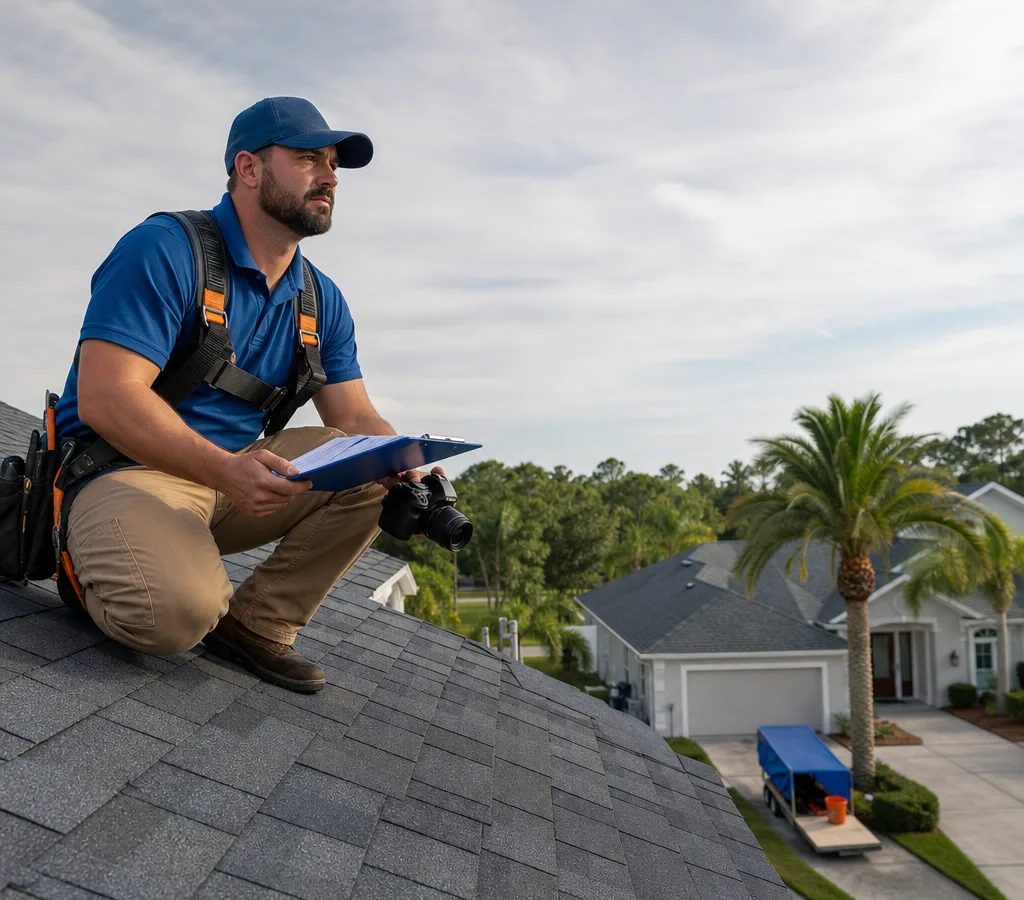
Real inspection, documented
We check penetrations, flashing, valleys, drip edge, and attic or ventilation conditions when accessible, then back it up with photos so you can see what we see.
Serving Jacksonville, Florida & surrounding areas
24/7 Response • Answered live
One call instead of ten No web forms, no callback spam Booking Fall & Winter 2026
Jacksonville, Florida roofing company
Work with a local crew that communicates clearly, documents roof conditions with photos, and leaves your property clean. Get a straightforward inspection and a written plan you can trust before any work starts.
✓ Skip the 3-hour Google rabbit hole — we’ve already done the vetting
✓ One conversation, not ten voicemails and seven web forms
✓ 24/7 response — talk to a real person who actually knows Jacksonville
Built for Northeast Florida
If you are searching for a Jacksonville Florida roofing company, you are usually dealing with one of three problems: active leaks, storm wear, or a roof that is simply at the end of its life. In Jacksonville, roofs take a beating from intense sun, heavy rain, high humidity, and hurricane-season winds. That means the details matter: how flashing is tied in, how valleys drain, how ventilation is balanced, and whether the underlayment and fasteners match the system being installed.
Roofing Jacksonville Florida provides roofing services for homes and buildings in Jacksonville, FL (32202) with an emphasis on clear scopes, code-aware installation, and job sites kept orderly. We start with a real inspection, not guesses from the ground. You get photos, a plain-English explanation of what is happening, and options based on your roof type and goals.
For an overview of our full roofing services and what we handle day to day, you can also review roofing in Jacksonville FL.
Clear expectations
We check penetrations, flashing, valleys, drip edge, and attic or ventilation conditions when accessible, then back it up with photos so you can see what we see.
Your quote should spell out tear-off depth, if any, underlayment type, flashing approach, shingle or membrane specification, and disposal plan.
When you have water inside, we focus on likely entry points like pipe boots, step flashing, wall transitions, and ridge or hip caps instead of jumping straight to a full replacement.
Roofing work is messy if the crew is careless. We set expectations for debris control, daily cleanup, and a final magnetic sweep around driveways and landscaping.
You should know who is on site, what is happening next, and when decisions are needed. We keep the plan simple and keep you updated.
A roof is a system: decking, underlayment, flashing, ventilation, and the exterior covering. We explain how one weak point can shorten the life of everything else.
Inspection-led recommendations
As a roofing company Jacksonville FL property owners can hire for both urgent and planned work, we typically help with:
Jacksonville has a wide mix of roof types. Older areas like Riverside and Avondale often have mature tree cover, which can mean more debris in valleys and gutters and more frequent attention to drainage points. Newer communities in areas like Nocatee commonly have large, simple roof planes that still need correct ventilation and flashing at penetrations. Beaches-area homes may see faster corrosion on exposed metal components, so fasteners and flashings should be selected and detailed with that in mind.
If you are comparing bids, insist that each roofer describes the same scope. Two estimates can look similar on price while using different underlayment, omitting critical flashing, or leaving out disposal and protection steps.
Inspection to walkthrough
Tell us what you are seeing—leak location, staining, missing shingles, granules in gutters, or storm concerns. We plan the visit around safe roof access and the roof type.
We examine common failure points: penetrations, flashing lines, valleys, ridge and hip caps, drip edge, and any previous repair areas. When attic access is available, we look for moisture staining and ventilation red flags.
You get a clear explanation of what is repairable and what is likely to keep failing. If replacement makes more sense, we outline the system and material choices so you can compare apples to apples.
Before work starts, we set expectations for landscaping protection, debris control, and staging. If weather shifts, we communicate how that affects timing.
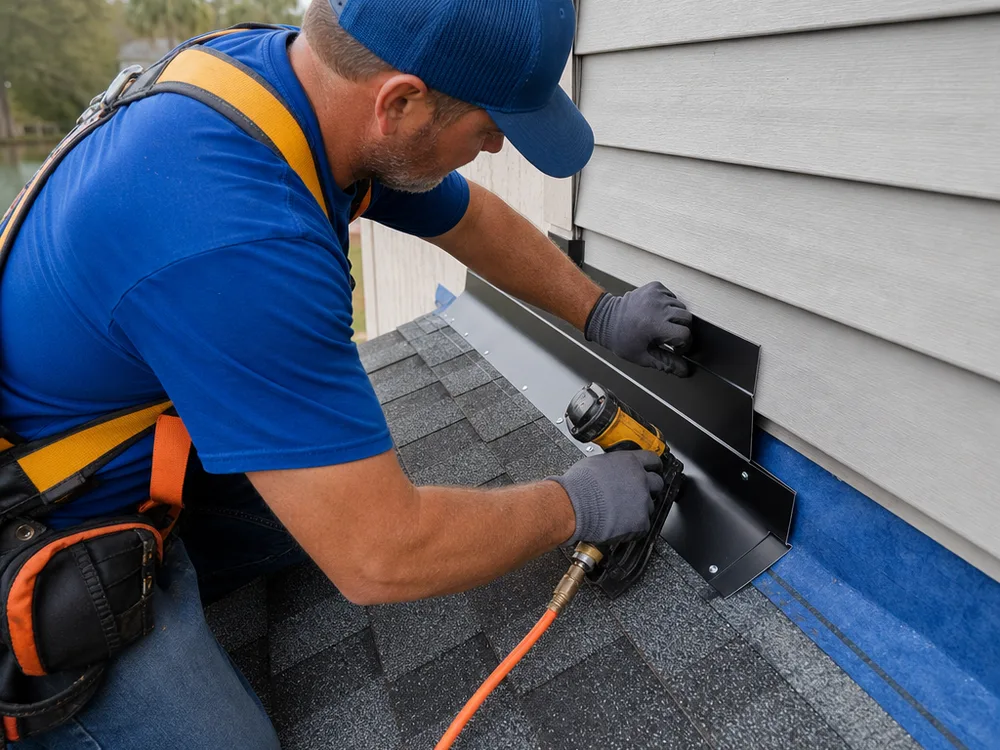
We confirm the details that stop leaks: correct flashing tie-ins, proper sealing at penetrations, straight courses, and clean transitions. We also keep the work area organized.
We haul away debris, run a magnetic sweep around walking areas, and review photos of completed work. You leave with documentation for your records.
Budget planning
Most Jacksonville roofing company projects typically run about $350 to $1,200 for common repairs, while a full roof replacement is often $9,000 to $22,000+ depending on size, pitch, material, and tear-off requirements.
Your final price changes with roof complexity—valleys, dormers, and chimneys—decking condition, ventilation upgrades, underlayment choice, disposal, and access for materials and debris. The exact scope and cost are confirmed after an on-site roof inspection and a written estimate.
Jacksonville homeowner experiences
“We had a leak that two previous repairs never fully solved. The inspection photos made it obvious the problem was at the wall flashing, not the shingles. The repair was quick, and the crew cleaned up nails from the driveway before leaving.”
“The estimate was specific about underlayment, flashing, and ventilation, so it was easy to compare. Work started when they said it would, and the yard looked the same at the end of the day as it did in the morning.”
Homeowner questions
For active leaks, most homeowners should expect an inspection and a temporary or permanent repair plan as soon as scheduling and weather allow. Heavy rain or lightning can delay roof access for safety, but the first priority is stopping water intrusion with a targeted repair or temporary dry-in while the full fix is scheduled.
A solid estimate should list the roof area being addressed, whether tear-off is included, the underlayment type, flashing approach—valleys, walls, chimneys, and penetrations—ventilation scope if applicable, protection and cleanup steps, and debris disposal. If two quotes do not match line by line on scope, they are not truly comparable.
Repairs make sense when the roof covering is generally serviceable and the leak traces to a specific detail like pipe boots, step flashing, or a small damaged area. Replacement becomes the better choice when there are widespread failures, repeated leaks in different locations, brittle or badly worn materials, or decking issues that cannot be addressed with localized work.
Yes, the approach depends on the roof design. Steep-slope asphalt shingle roofs rely heavily on correct flashing, underlayment, and ventilation, while low-slope systems depend on membrane detailing and drainage. During the inspection we confirm the roof type and propose the correct repair or replacement method for that system.
Many leaks start at penetrations and transitions rather than the field shingles or panels. Pipe boots, wall flashing, valleys, skylights, and fastener issues are frequent culprits, especially after wind-driven rain. A proper inspection focuses on these details and tracks the water path instead of treating the stain location as the entry point.
Many residential roof replacements are completed in 1 to 3 days once materials are on site, but timelines vary with roof size, complexity, decking repairs, and weather. In Jacksonville, afternoon storms can interrupt work, so we plan for dry-in and communicate any schedule shifts early.
Start with a clear inspection
Tell us what is going on with your roof and what you want long-term. We will inspect, document the problem with photos, and provide a written scope with options that fit your home and budget.